
Short answer: if pavers have sunk, lifted or started rocking, the base underneath has moved, and the fix is to lift that section, rebuild and compact the base, and relay the same pavers. Joints that have lost their sand get cleaned out and refilled. Both are done before sealing, because a sealer locks in whatever is there.
Most of the paver surfaces we look at in Stuart don’t need repair at all, just cleaning, sand and sealer. But a good share have one or two problem spots: the strip beside the garage where rainwater pours off the roof, a corner the irrigation hits every night, a low patch at the end of the driveway where delivery trucks turn. Sealing over those gives you a shiny version of the same dip.
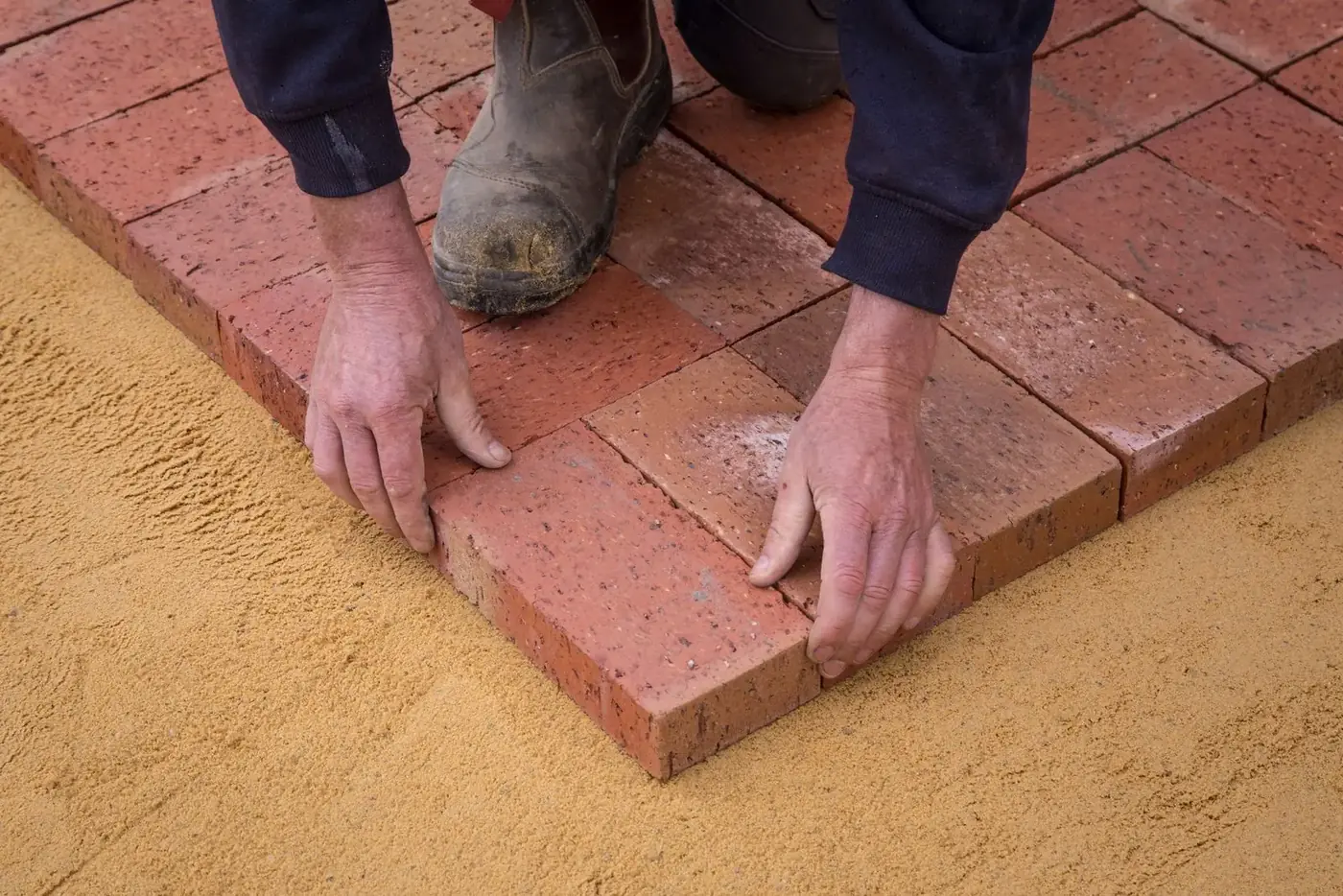
Why pavers sink and shift here
Pavers float on a bed of sand over a compacted base. The surface only stays flat while that base stays put and the joints stay full. In Stuart, three things work against it. Heavy summer downpours run off roofs and across driveways and carry joint sand with them. The sandy native soil under many lots settles where water collects. And roots from oaks and palms planted close to the edge push up from below. Once joints open, pavers can rock, edges chip, and the gaps fill with seeds instead of sand.
How a repair is done
- Lift the section. Pavers in the low or lifted area are pulled and set aside in order, so the pattern goes back the same.
- Find the cause. A broken downspout extension, a leaking irrigation head or a root is dealt with or flagged, or the patch will sink again.
- Rebuild the base. Base material is added, compacted and screeded to the right height and slope so water runs off the way it should.
- Relay and match. Original pavers go back; cracked ones are swapped for the closest match available. A new paver next to old ones may look brighter until it weathers and the sealer evens them out.
- Edge restraint. Where pavers have spread at the edges, the restraint is reset so the field stays locked.
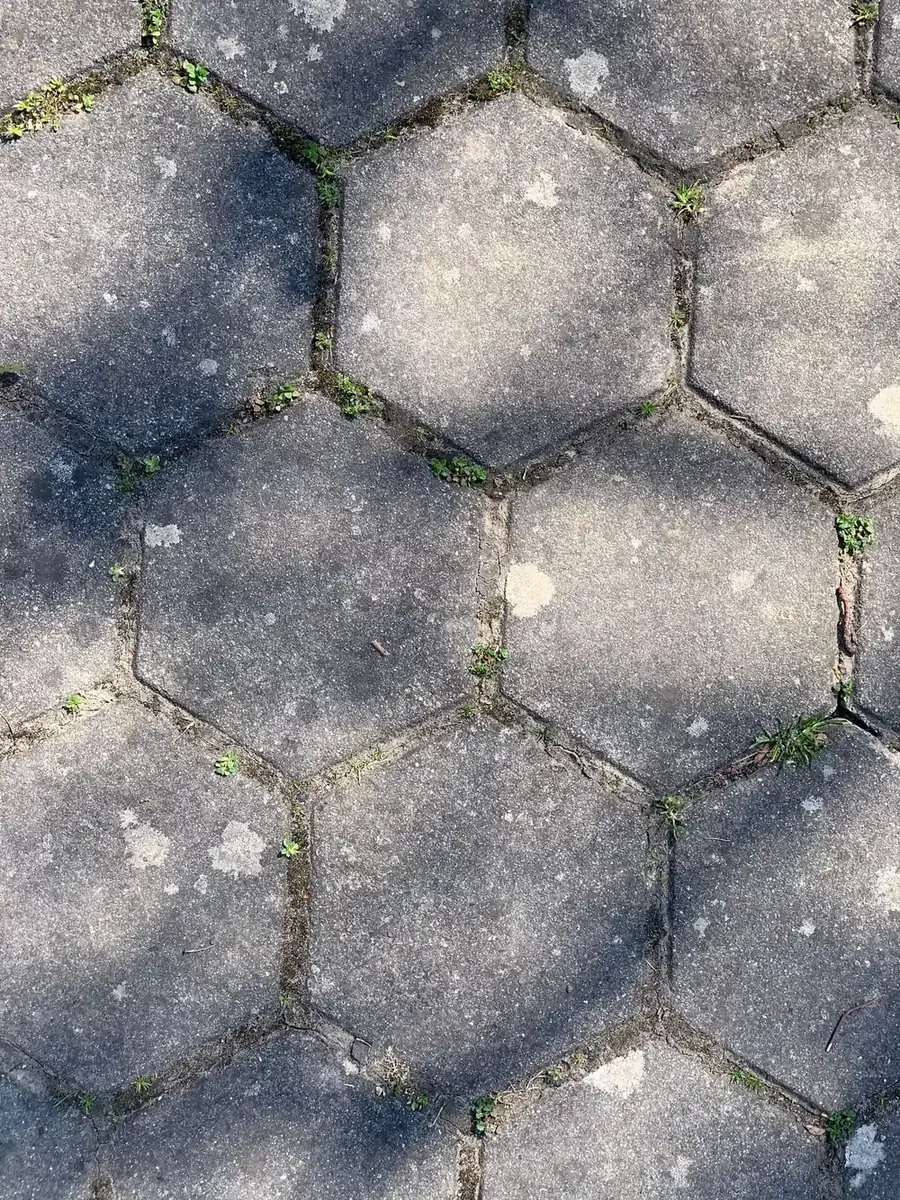
Joint re-sanding and polymeric sand
Re-sanding is part of every full sealing job we do: old, dirty joint sand is cleaned out, and fresh sand is swept in and vibrated down until the joints are full to just below the bevel. The sealer then binds the top of that sand so rain can’t wash it out. On some jobs, polymeric sand (sand mixed with a binder that hardens when wetted) is the better choice, mainly on steep driveway aprons and pool decks where water runs hard across the surface. It has to be installed dry and activated carefully; done wrong, it leaves a hazy film on the face of the pavers. We explain which one your surface gets on the quote.
Repair figures below are estimates. A sunken area can look small and turn out to have a soft base well beyond its edges, so the price on your written quote is set once the pavers are lifted enough for us to see what is underneath, and we confirm any change with you before doing it.
What repairs cost
Resetting a sunken or lifted area usually runs $12–$28 per sq ft of affected area, with a small-repair minimum of $350–$650 when it is the only work being done. Re-sanding joints on its own is $0.50–$1.00 per sq ft; when it is part of a full clean-and-seal it is already in the $1.50–$2.75 per sq ft price. The cost guide has the full table.
When it isn’t a repair job
If most of a driveway has dropped, or the pavers sit on soil with no proper base, resetting patches won’t hold. We’ll say so and suggest you talk to a paver installer about a rebuild, rather than sell you repairs that fail in a season.
Repair and re-sanding questions
Can you match my pavers if some are broken?
Often, if the style is still made. Older or discontinued colors can be hard to match exactly, so we may borrow pavers from a hidden spot, such as under a planter or along a side yard, and put the new ones there.
Do I need re-sanding if I’m only getting cleaning?
Usually. Pressure cleaning lifts some joint sand no matter how carefully it is done. Leaving the joints half empty invites weeds and lets pavers move.
Is polymeric sand better than regular sand?
Not always. It resists washout on slopes and pool decks, but it must be put down dry and activated just right. Regular sand locked in by a joint-stabilizing sealer works well on most flat driveways and patios.
Why do my pavers keep sinking in the same spot?
Something is feeding water to it, most often a downspout, a gutter overflow or an irrigation head. We find the source as part of the repair.
Last reviewed October 2026.